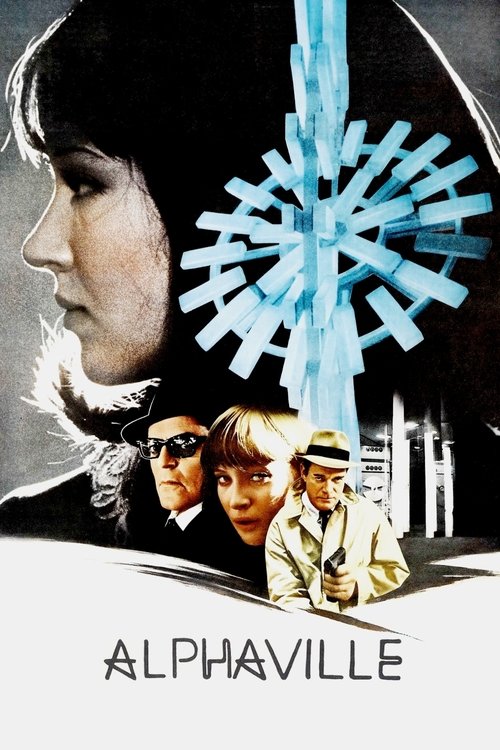
Eddie Constantine, Anna Karina, Akim Tamiroff, Valérie Boisgel, Jean-Louis Comolli
1965-05-05
Lemmy Caution is on a mission to eliminate Professor Von Braun, the creator of a malevolent computer that rules the city of Alphaville. Befriended by the scientist’s daughter Natasha, Lemmy must unravel the mysteries of the strictly logical Alpha 60 and teach Natasha the meaning of the word “love.”

Alphaville presents a fascinating study of a hyper-rational society and the paradoxes inherent within it. Godard's film is a brilliant amalgamation of noir sensibilities and science fiction tropes, resulting in a narrative that both delights and challenges the intellect. The juxtaposition of emotion and logic, encapsulated in the interactions between Lemmy Caution and Natasha, offers a profound commentary on human experience. Godard's deliberate pacing and unconventional storytelling are commendable, providing a viewing experience that is both cerebral and engaging. The film's black-and-white cinematography effectively enhances its dystopian atmosphere, making it a thought-provoking addition to the sci-fi genre.

I was intrigued by Godard's unique approach to dystopian science fiction, creating a futuristic world using only contemporary 1960s locations and architecture. The film's philosophical exploration of logic versus emotion and the dehumanizing effects of technology felt particularly relevant given my appreciation for cerebral sci-fi like 'Solaris' and '2001: A Space Odyssey'. Eddie Constantine's performance as Lemmy Caution brings a noir sensibility to the proceedings that I found compelling. However, I felt the film's avant-garde style and deliberately abstract narrative made it less accessible than some of Tarkovsky's work, though the underlying themes about language, control, and human consciousness were thought-provoking.