Alisa Freyndlikh, Aleksandr Kaydanovskiy, Anatoliy Solonitsyn, Mykola Hrynko, Natalya Abramova
1979-05-25
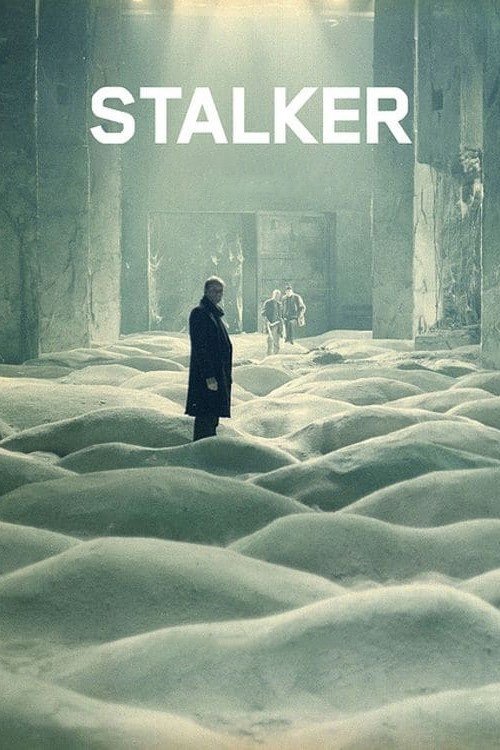
Near a gray and unnamed city is the Zone, a place guarded by barbed wire and soldiers, and where the normal laws of physics are victim to frequent anomalies. A stalker guides two men into the Zone, specifically to an area in which deep-seated desires are granted.

Andrei Tarkovsky's 'Stalker' is an exegetical journey through the metaphysical and the sublime. The film is a profound meditation on faith, desire, and the nature of human ambition. It is a work that demands contemplation and resonates with the themes of exploration and discovery that are so dear to my intellectual pursuits. The film's pacing is deliberate, reflecting the ponderous weight of its philosophical inquiry. A true testament to the power of cinema as a medium for profound thought.

Tarkovsky's 'Stalker' presents a profound meditation on the human condition, set against a backdrop of the enigmatic Zone. The film's meticulous pacing and surreal cinematography invite the viewer to contemplate the nature of desire and the pursuit of meaning. While its oblique narrative and metaphysical themes may pose a challenge to some, the film's atmospheric tension and philosophical inquiry offer a rewarding experience for those willing to engage with its cerebral complexity. The use of long takes and natural lighting further enhances the sense of immersion, making it a captivating, albeit demanding, cinematic experience.

Andrei Tarkovsky's Stalker is an existential odyssey that transcends conventional narrative structures, delving into the complexities of human experience and metaphysical inquiry. The film's pacing is deliberately slow, encouraging viewers to engage in contemplation rather than mere observation. Its hauntingly beautiful cinematography and the profound ambiguity of its themes invite a multitude of interpretations, making it a rich subject for intellectual exploration. While it may not appeal to those seeking action or straightforward storytelling, its depth and philosophical rigor are unparalleled.

Andrey Tarkovsky's 'Stalker' presents a journey into the enigmatic Zone, a place where the boundaries between reality and the surreal blur. The film’s visual poetry and philosophical depth are staggering, pushing one to reflect on themes of existentialism and the human quest for meaning. The narrative is slow-paced, yet every frame is meticulously crafted, making it a rewarding watch for those who appreciate contemplative cinema. The dialogue, though minimal, is profound, and the performances are intensely committed, creating an immersive atmosphere.

Andrei Tarkovsky's 'Stalker' is a transcendent voyage into the realm of the metaphysical, a film that demands an audience's complete surrender to its enigmatic narrative and haunting visual poetry. The meticulous composition of each frame, coupled with the profound silences that punctuate the dialogue, create an atmosphere of contemplative depth. Tarkovsky's use of long takes and the interplay of light and shadow are nothing short of hypnotic, inviting the viewer to ponder the profound questions of existence and purpose. This is cinema as a spiritual experience, a meditative exploration of the human psyche that lingers long after the credits roll.