Gustav Fröhlich, Brigitte Helm, Alfred Abel, Rudolf Klein-Rogge, Theodor Loos
1927-01-10
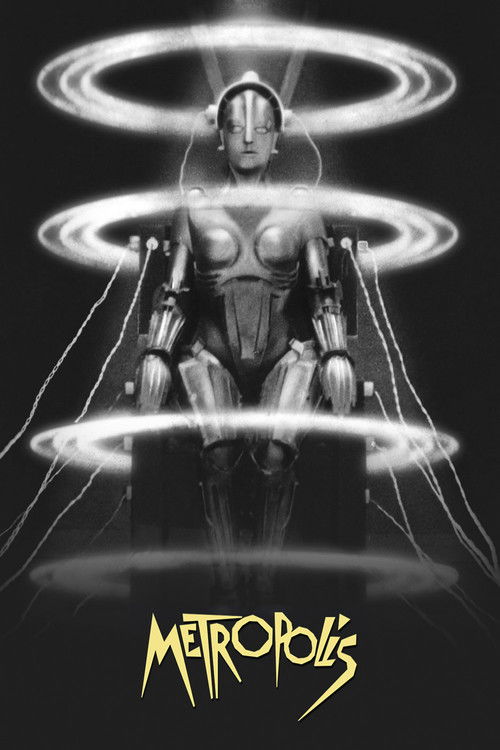
In a futuristic city sharply divided between the rich and the poor, the son of the city's mastermind meets a prophet who predicts the coming of a savior to mediate their differences.

Fritz Lang's 'Metropolis' stands as a monument to the industrial age, a visual feast that melds dystopian dread with the mechanical splendor of an age obsessed with progress. The film's chiaroscuro aesthetics evoke a sense of eternal struggle between the creator and the created, a theme that resonates profoundly with my own ethos. The narrative, though at times didactic, serves as a profound allegory for the consequences of a society that forsakes the individual for the collective. It is a work that commands respect, not merely for its pioneering visual style but for its uncompromising exploration of the human condition within the framework of industrialization.

Lang's 'Metropolis' presents a pioneering exploration of societal dystopia through its visual language and thematic depth. The film's dichotomy between the leisure class and the worker drones is rendered with a striking, almost gothic precision, which aligns with my appreciation for science fiction that grapples with profound philosophical questions. While the narrative can be perceived as heavy-handed, its allegorical undertones and visionary aesthetics warrant serious consideration, albeit not a top tier intellectual experience. The dichotomy of Fritz Lang's stylistic grandiosity and the era's technological limitations is palpable, offering a historical window into early cinematic ambition.

This silent film is an avant-garde exploration of humanity's relationship with technology, a theme that resonates deeply with my engineering background. Lang's meticulous set design and storytelling prowess create a world that is both fantastical and eerily plausible. The film's commentary on societal divides is as relevant today as it was nearly a century ago. While the narrative structure might feel archaic to contemporary viewers, its visionary scope and philosophical underpinnings earn it a place in any discerning cinephile's library.

Fritz Lang's 'Metropolis' is a visual feast that stands the test of time. Its exploration of class divides and the mechanization of society feels as pertinent today as it did upon its release. Brigitte Helm's dual role is nothing short of mesmerizing, and the film's special effects, especially for its era, are groundbreaking. It's a stark, thought-provoking piece that aligns perfectly with my love for the Golden Age of science fiction.
Eine ikonische Betrachtung der Weimarer Ära, Fritz Langs 'Metropolis' übertrifft durch seine kühne visuelle Sprache und soziopolitische Themen seine Zeitgenossen bei Weitem. Die Film noir-Ästhetik und die komplexe Charakterstudie erinnern mich an die Schattenseiten der Berliner Gesellschaft, die ich während meiner Dienstzeit erlebt habe. Die Darstellung der Klassenkämpfe und der technisierten Zukunft ist eindringlich, obwohl die Handlung an einigen Stellen etwas melodramatisch wirkt. Ein Meilenstein des deutschen Kinos, der trotz einiger übertriebener Darstellungen ein zeitloses Werk bleibt.

Diving into 'Metropolis' was like exploring a labyrinth of visionary urban dystopia, a prelude to the cyberpunk aesthetic that would later flourish in the genre. Lang's meticulous attention to set design and visual storytelling is palpable; every frame feels like a carefully crafted piece of art. The contrast between the sterile upper city and the chaotic underworld is stark, yet seamlessly woven into the narrative. It's a film that demands your full attention, its socio-political undertones as relevant today as they were nearly a century ago. A testament to the power of silent cinema, it stands as a cornerstone of speculative fiction.