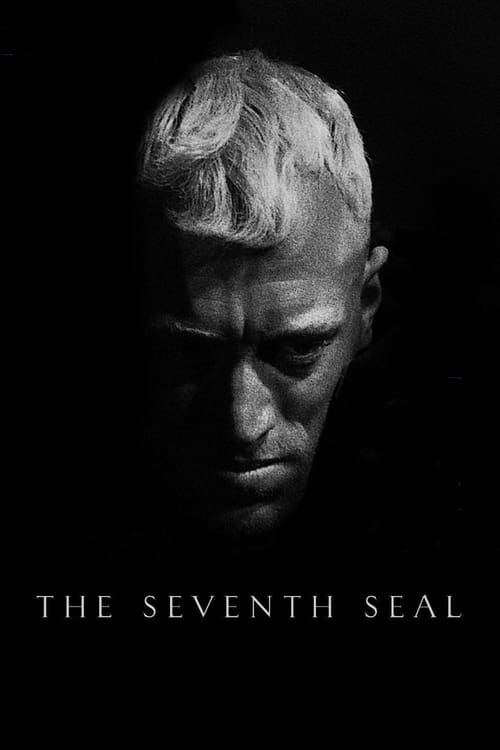
Gunnar Björnstrand, Bengt Ekerot, Nils Poppe, Max von Sydow, Bibi Andersson
1957-02-16
When disillusioned Swedish knight Antonius Block returns home from the Crusades to find his country in the grips of the Black Death, he challenges Death to a chess match for his life. Tormented by the belief that God does not exist, Block sets off on a journey, meeting up with traveling players Jof and his wife, Mia, and becoming determined to evade Death long enough to commit one redemptive act while he still lives.

Bergman's The Seventh Seal presents an existentialist's meditation on life and mortality. Its use of allegory and symbolism is profound and thought-provoking. The film’s exploration of faith, despair, and the search for meaning in a seemingly indifferent universe is timeless. It is a stark departure from my usual fare, yet it offers a deep and meaningful experience that resonates with my philosophical inclinations.

Ingmar Bergman's The Seventh Seal presents a stark contrast to my usual selections, yet it offers a profound exploration of existential themes that are both challenging and enriching. The film's medieval setting and its examination of human mortality through the lens of a game of chess with Death itself provide a compelling counterpoint to the industrial and rational themes I typically favor. While it does not align perfectly with my usual preferences, its depth and the director's masterful storytelling earn it a place in my library. It is a reminder that even in the face of the unknown, the human spirit can find purpose and meaning.
Watching Ingmar Bergman's 'The Seventh Seal' felt like an artistic masterclass. The philosophical dialogues, especially between Antonius Block and Death, resonate profoundly with existential ponderings. The visual style and symbolism are breathtaking, immersing me in medieval Europe's somber atmosphere. It's a film that demands reflection, and I found myself contemplating its themes long after the credits rolled.

Bergman's 'The Seventh Seal' offered a starkly different yet equally captivating experience. The film's existential musings, set against the haunting backdrop of the Black Death, provide a profound commentary on life, death, and faith. Max von Sydow's portrayal of the knight is hauntingly authentic, and the iconic chess game with Death remains one of the most memorable scenes in cinema. A stark yet beautiful meditation on the human condition.